KYC Compliance Transformation
Using data, governance, and clear metrics to reduce KYC non-compliance by more than 25×
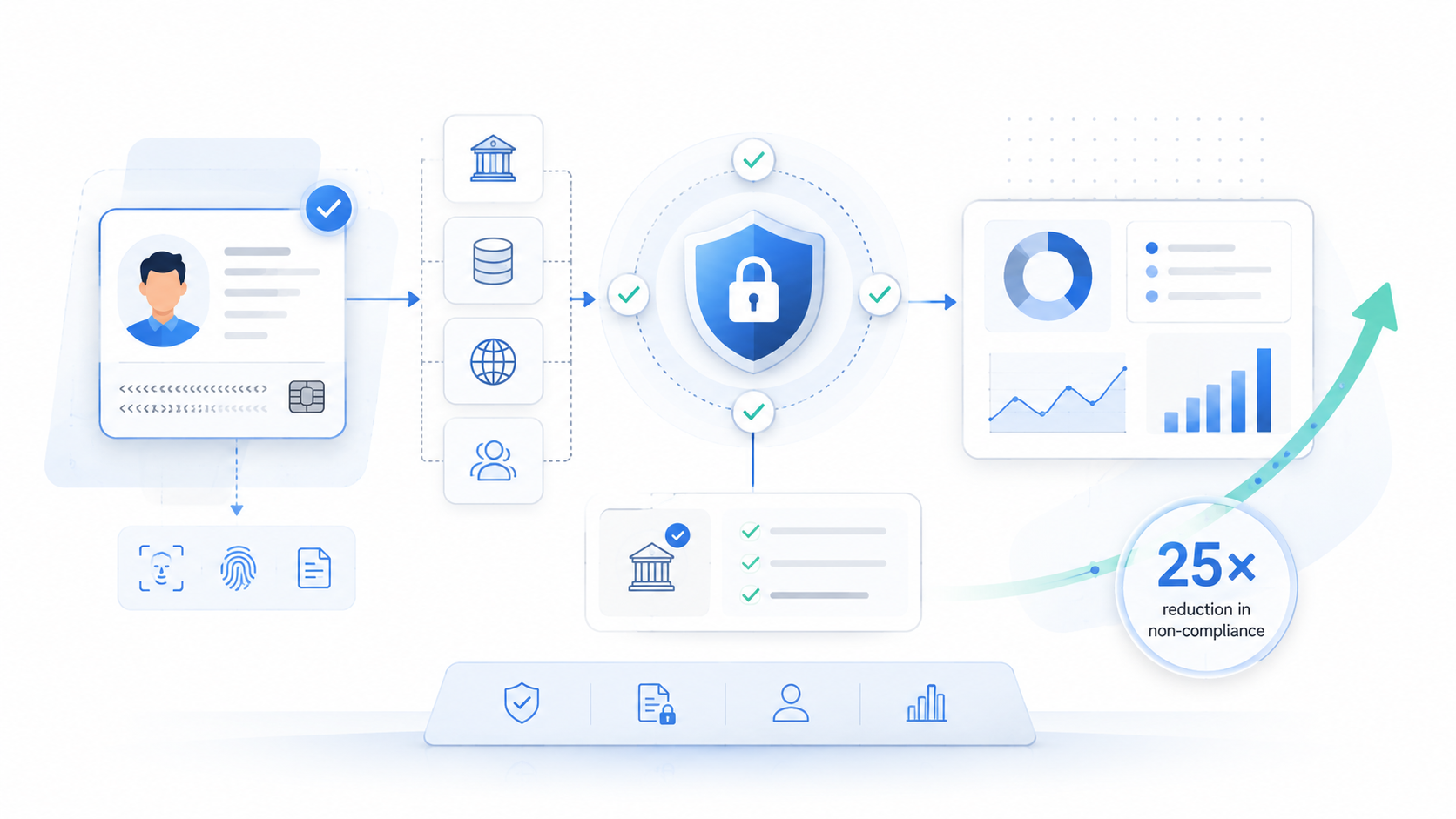
KYC is often treated primarily as a compliance problem. In practice, a large part of the challenge is also a data problem.
During my time in banking, I was involved in an initiative to improve how KYC compliance was measured, monitored, and acted upon. At the time, customer information was distributed across different systems, reporting was not always based on the same definitions, and different stakeholders could arrive at different views of the same problem.
The objective was not simply to produce another report. It was to establish a reliable and consistent way of answering a basic question:
Is this customer KYC compliant or not?
Establishing a Common View
One of the first challenges was agreeing on the rules and metrics.
Regulatory and business requirements had to be translated into measurable data rules. Definitions needed to be consistent, calculation logic needed to be understood, and discrepancies between different sources had to be reconciled.
The work involved consolidating data from multiple sources, defining validation rules, building consistent compliance metrics, and gradually establishing a trusted view of customer KYC status.
This became an important part of the solution. If different teams use different definitions or numbers, the discussion quickly becomes about whose number is correct rather than what action needs to be taken.
A common measurement framework shifted the conversation toward remediation.
Turning Measurement into Action
The data solution was only one part of the work, and a recurring operating cycle had to be established around the metrics:
Compliance status was measured consistently, gaps were made visible to the relevant stakeholders, remediation took place, and the results could then be reflected in the following reporting cycle.
This created a much clearer feedback loop between data, management, and operational teams.
Over time, the approach contributed to a more than 25× reduction in KYC non-compliance.
The improvement was not the result of analytics alone. It came from combining reliable measurement with clear ownership, transparency, management attention, and continued operational follow-up.
What the Project Reinforced
A few lessons from the experience have continued to influence how I approach Data & AI initiatives.
A technically correct metric has limited value if different stakeholders interpret it differently.
Many data issues cannot be solved purely through engineering. Ownership, definitions, processes, and accountability matter just as much.
A dashboard does not change an organisation. What matters is what happens after somebody sees the number.
Once stakeholders trust the underlying data and logic, discussions can move away from reconciling numbers and toward solving the underlying problem.
From Institutional KYC to Centralised KYC
Working on KYC also highlighted a wider structural issue.
Every financial institution maintains its own KYC processes, collects many of the same documents, performs similar verification activities, and periodically asks customers to provide information that may already exist elsewhere in the financial system.
This led me, together with Ali Hussein, to develop and publicly share AuthNet, a concept for a centralised KYC utility for Kuwait.
The idea was straightforward: rather than repeatedly rebuilding the same KYC capability within every institution, a common infrastructure could maintain verified customer information and allow authorised institutions to access it when required.
We deliberately shared the concept publicly rather than treating it as a proprietary product. The intention was to contribute to the discussion around how KYC infrastructure in Kuwait could evolve.
Since then, Kuwait has started moving toward a national eKYC platform built around a centralised model.

Local news coverage of Kuwait's national eKYC platform initiative (Al-Anbaa, Kuwait).
I do not claim that the national initiative resulted from AuthNet. What I find interesting is that the direction is closely aligned with the underlying problem we were trying to address: reducing duplication, improving consistency, and treating trusted customer identity information as shared financial infrastructure rather than something every institution needs to recreate independently.
Impact
The initiative contributed to a more than 25× reduction in KYC non-compliance, while also improving the quality and consistency of customer information used across the organisation.
It helped:
- Establish a trusted and consistent view of KYC compliance
- Improve the quality of information available to AML, Audit, Compliance, and other business teams
- Support faster and more targeted remediation of compliance gaps
- Reduce regulatory risk and exposure to potential fines or penalties
The project remains one of the clearest examples from my career of how data work creates value when technology, governance, metrics, and organisational processes are aligned together towards a common goal.
← Back to Portfolio