[Medium Article] 12 Years in Data & AI: Lessons Organizations Keep Learning the Hard Way
date posted: 2026-Mar-07, last edit date: 2026-Mar-11
Originally published on Medium, March 7, 2026.
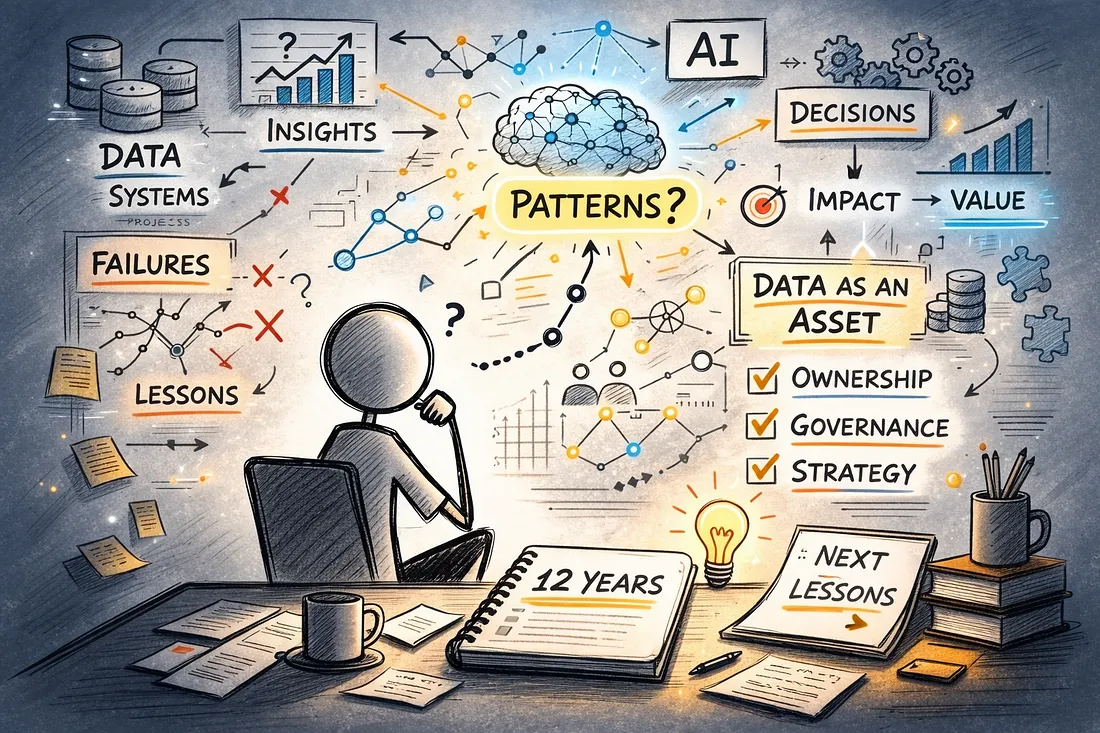
I've been reflecting on my past 12 years working in Data and AI, and I've noticed an uncomfortable pattern.
Most data problems are not actually data problems — they are organizational problems.
Most organizations do not fail at data because of technology. They fail because their operating model still treats data as a by-product rather than a core asset.
Over the years, I have seen the same pattern repeat itself across organizations. Technology keeps improving, yet many organizations continue to struggle to create real value from data.
In the coming days, I will share a few lessons that stand out.
The first lesson is simple, but organizations keep learning it the hard way.
Lesson #1: Do Not Treat Data as an Afterthought

This is the number one mistake I see organizations repeatedly make. It sits at the top of the list because it is extremely costly — and the cost compounds over time.
Examples:
- An organization launches a new product or service, then spends weeks or months trying to figure out how to measure usage or success.
- A regulatory request arrives and teams scramble because the required data was never properly defined or tracked.
- A strategic initiative begins, and arguments arise because no one knows which data is actually correct.
These are real examples, and they are common across organizations globally. If you are lucky, someone on the team knows how to retrieve the data. If you are unlucky, the data simply does not exist because it was never recorded in the first place.
Why This Is Different From Technical Debt
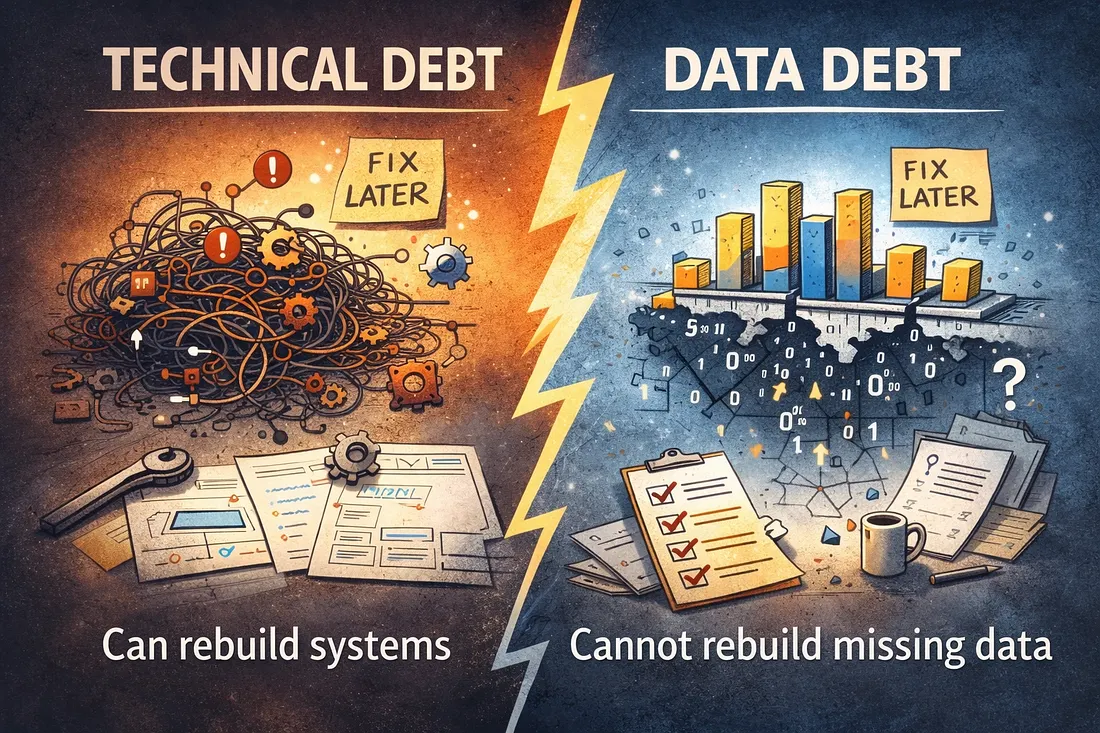
Many organizations assume they can solve these problems later.
But data debt is worse than technical debt.
You can rebuild systems.
You cannot rebuild missing data.
So What Is the Solution?
The solution lies in data modeling.
In simple terms, it means thinking about the data you will need before launching an initiative, and agreeing on what key concepts actually mean.
A Simple Example
A team asks:
How many users are using our mobile app?
At first glance this seems like a simple request, but it quickly becomes more complicated.
What do we mean by users?
- Are “users” and “customers” the same thing?
- Are we referring to retail customers only, or corporate customers as well?
- Does “using the app” mean having a registered username?
- Or does it mean actively using the app?
- If we mean active users, how do we define that?
- Logged in once?
- Logged in within the last 90 days?
- Performed a transaction?
- Did we even create an active-user flag before the app went live?
These questions may seem tedious, but answering them early creates something powerful: data that can be trusted from day one.
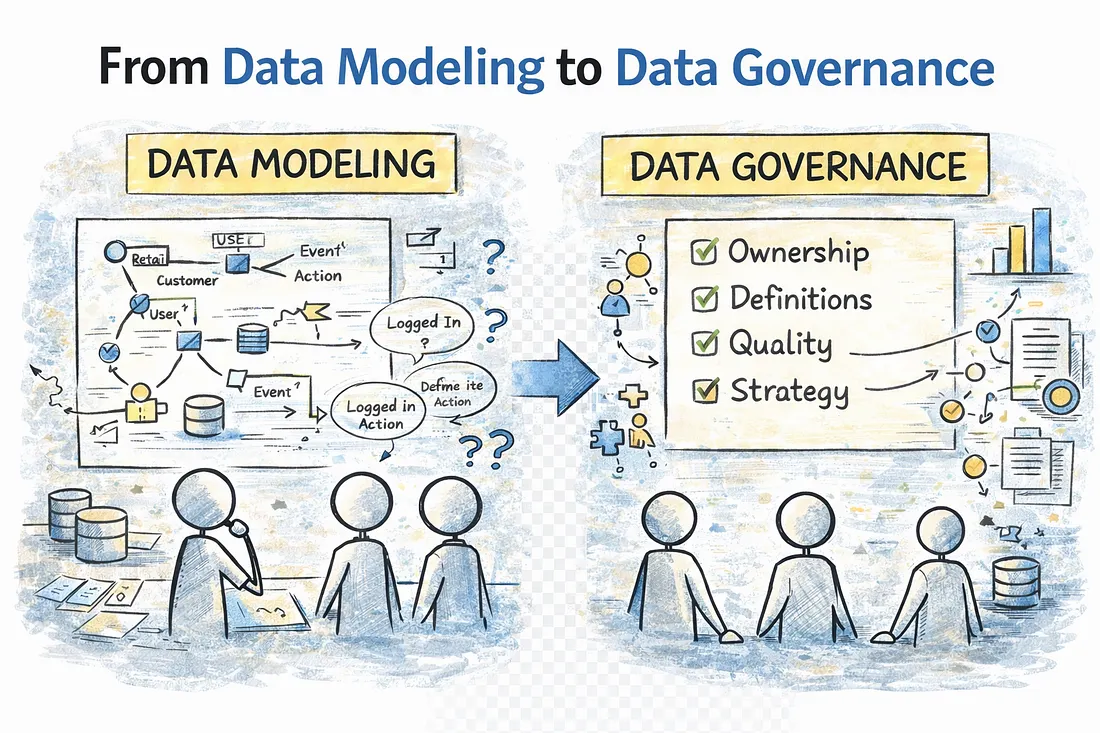
From Data Modeling to Data Governance
When done consistently across the organization, this practice naturally leads to data governance.
Data governance provides:
- clear ownership
- shared definitions
- quality controls
- accountability for data assets
Without these foundations, organizations often find themselves constantly trying to fix data problems after the fact.
Closing
Organizations often invest heavily in technology, AI, and analytics.
But none of it works if the foundation is weak.
Data cannot be an afterthought.
It must be designed from the start.